
The History of Steamboats
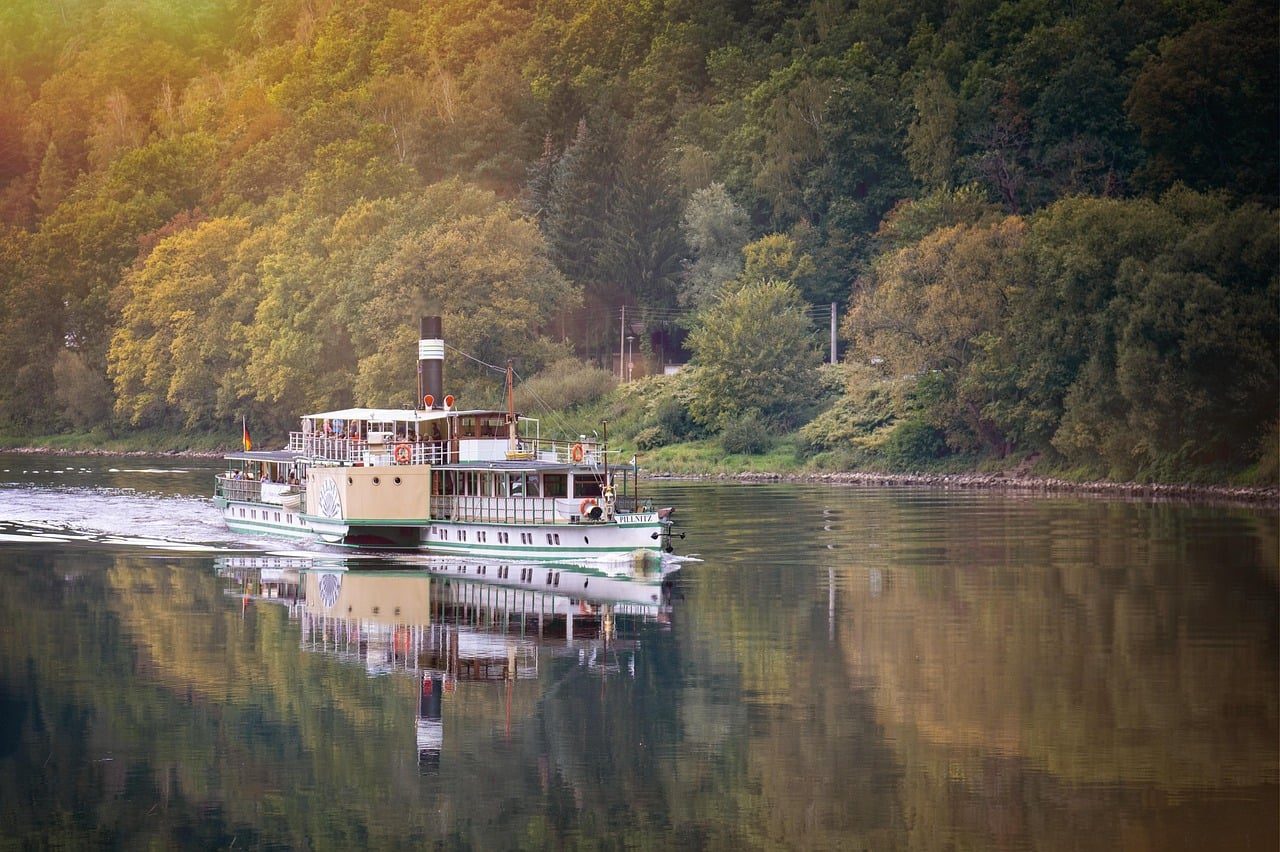
Article overview: The late 1700s marked the birth of the steamboat, largely due to the groundbreaking work of Scottish inventor James Watt. Watt revolutionized steam...
The late 1700s marked the birth of the steamboat, largely due to the groundbreaking work of Scottish inventor James Watt. Watt revolutionized steam technology in 1769 by patenting an improved steam engine, a development that played a key role in the Industrial Revolution. His innovation sparked interest among inventors, who sought ways to apply steam power to water transportation. Watt's contributions laid the foundation for a new era in travel and commerce.
Pioneering the First Steamboats
John Fitch was the first American to construct a functioning steamboat. On Aug. 22, 1787, he successfully launched a 45-foot vessel on the Delaware River. Seeking to expand on this achievement, Fitch then built a larger steamboat designed for transporting passengers and cargo between Philadelphia and the city of Burlington, NJ. However, his journey was not without challenges; he found himself in a patent dispute with James Rumsey, a rival inventor. Though Fitch secured his U.S. patent on Aug. 26, 1791, Rumsey also received a patent for a very similar design, allowing the competitors to continue their own steamboat projects. Between 1785 and 1796, Fitch built four different steam-powered boats, experimenting with various propulsion methods, including paddle wheels, screw propellers, and ranked paddles inspired by Native American war canoes. While his designs proved that steam-powered water travel was possible, Fitch struggled with financial and logistical obstacles. The high cost of construction and operation made it difficult to secure investors, leading to his eventual financial downfall.
Robert Fulton: A Visionary in Steam Navigation
Before making his mark in steamboat history, an American inventor named Robert Fulton dabbled in other areas of engineering, including designing a submarine while in France. However, his ability to transform steamboats into a potentially profitable enterprise earned him the title of the "father of steam navigation."
Fulton was born on Nov. 14, 1765, in Lancaster County, Pennsylvania. He demonstrated artistic talent as a child and pursued a career as a painter in Philadelphia. However, his interests soon shifted toward engineering and scientific research. In 1786, he moved to London, where he secured patents for various inventions and developed a keen interest in improving canal systems. By the late 1790s, as European conflicts intensified, Fulton turned his attention to naval warfare, working on designs for submarines, torpedoes, and mines. While in France, he built a submersible craft called the Nautilus in 1800, but a lack of interest from both French and British authorities halted further development.
Despite setbacks, Fulton remained passionate about steam-powered boats. He partnered with Robert Livingston in 1802 to build a steamboat capable of navigating the Hudson River. After years of testing in Europe, he returned to New York in 1806, determined to bring his vision to life.
Fulton's Breakthrough in Steam Navigation
On Aug. 17, 1807, Fulton's steamboat, the Clermont, set out on a historic journey from New York City to Albany. This marked the launch of the first successful commercial steamboat service. Traveling at an average speed of 5 miles per hour, the Clermont proved that steam-powered vessels could be both practical and efficient. Fulton and Livingston continued their work, introducing the New Orleans in 1811, which operated on the Mississippi River. Then, Fulton worked with Livingston's brother, Edward, to launch a regular commercial steamboat service between New Orleans and Natchez. These boats traveled downstream at speeds of 8 miles per hour and upstream at 3 miles per hour, significantly improving transportation in the region.
The Rise and Decline of Steamboats
The steamboat industry saw rapid advances after Henry Miller Shreve introduced the Washington in 1816. His vessel completed the journey from New Orleans to Louisville, Kentucky, in just 25 days, a major improvement in travel time. By 1853, this journey was reduced to an impressive four and a half days. Steamboats became a crucial part of the American economy, facilitating the transportation of goods such as cotton and sugar while also providing passenger services. Between 1814 and 1834, the number of steamboat arrivals in New Orleans surged from just 20 to an astounding 1,200 per year.
However, steamboats eventually faced stiff competition from railroads. Although steam engines powered both modes of transportation, trains offered several advantages: They moved faster, were less affected by weather conditions, and were not restricted to waterways. By the 1870s, the expansion of rail networks across the country, with routes running in all directions, brought about the end of steamboats as the dominant mode of transport. While steamboats had revolutionized travel and trade, they ultimately could not compete with the speed and flexibility of railroads.
Additional Resources
- Steamboats and the West
- A Brief History of Steamboats
- History of Transportation: Steamboats
- The First Steamboat
- The Golden Age of the Steamboat, 1851-1900
- A History of Steamboating in the Ohio Valley
- All About Steamboats
- Yachts for Sale
- When Deadly Steamboat Races Enthralled America
- Encyclopedia of Arkansas: Steamboats
- History of Postal Steamboats
- "Fulton's Folly" Steams up the Hudson
- The Steamboat After Fulton
- Buy a New or Used Yacht
- The Origins of the Steamship